
Editor's Note: The following view contains spoilers for Marjorie Prime. Read on with that in mind.
A week before I was set to see Marjorie Prime, I started to realize my memory was playing tricks on me. I was visiting my mother, who is 90—five years older than the memory-challenged titular character Marjorie but six years younger than June Squibb, the incandescent actor who portrays her—and she asked what the show was about. I had already fallen for Jordan Harrison’s poignant play a decade ago when it ran at Playwrights Horizons with Lois Smith (who also starred in the subsequent indie movie). I found myself haunted by its piercing observations about aging and loss—not just of loved ones, but of our recollections.
My mother interrupted my raving. "I think we saw this together," she said. I did not remember that but, sure enough, the calendar on my iPhone proved her right.
That was the first indication that my seemingly vivid memories of Marjorie Prime were about to unravel.
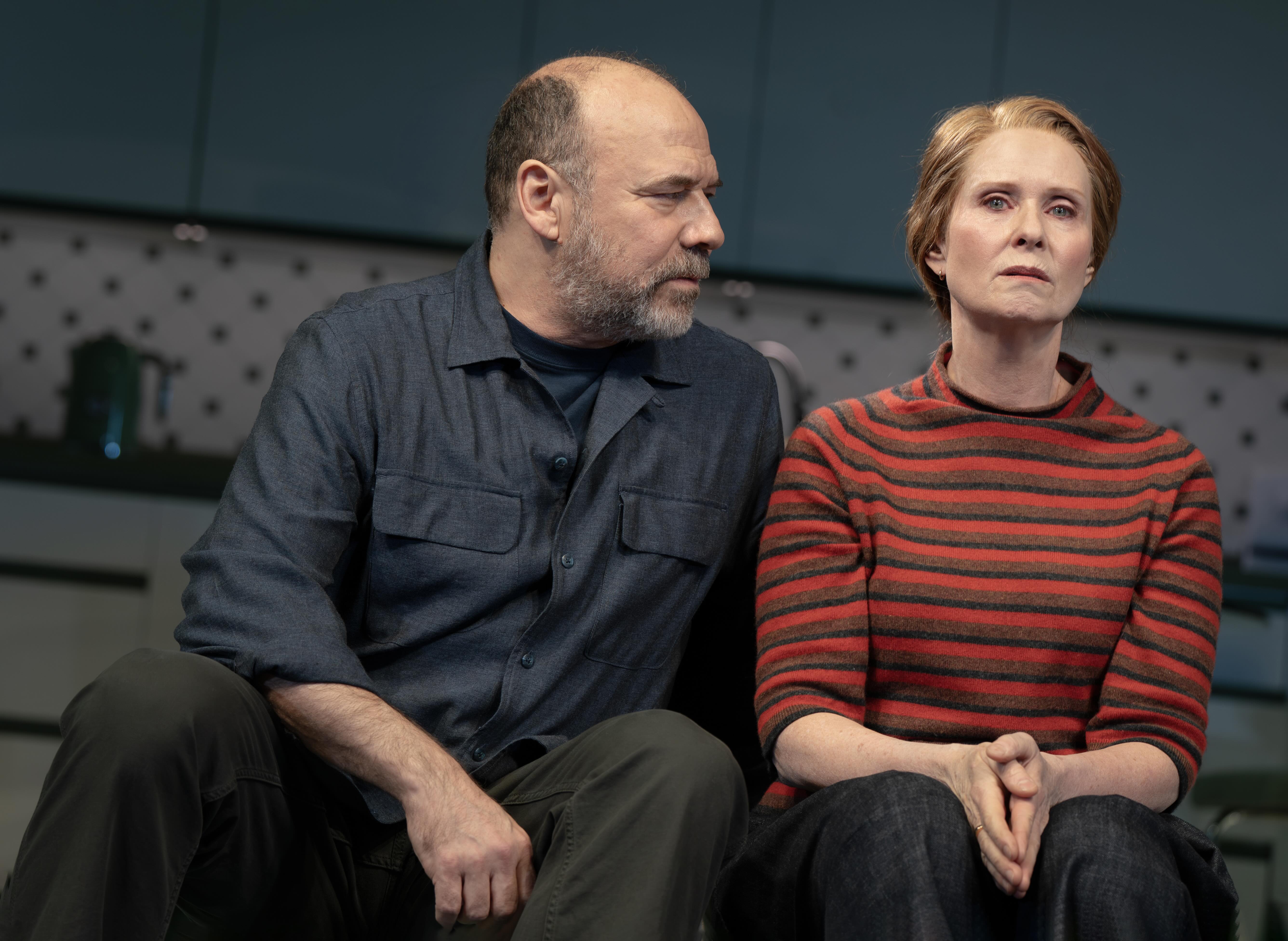
Written by Harrison in 2014 and shortlisted for the 2015 Pulitzer Prize, Marjorie Prime is set in the not-too-distant future and centers on an ailing 85-year-old widow being cared for by her indignant daughter Tess (Cynthia Nixon), empathetic son-in-law Jon (Danny Burstein) and a handsome young man (Christopher Lowell) who turns out to be an AI avatar (aka a “Prime”) of her late husband Walter. Patient, pleasant and somewhat ethereal, the replicative Walter Prime regurgitates stories about Marjorie's life—fed to him by Jon, Tess, and Marjorie herself—as he tries to prevent her remembrances from completely falling away.
As I watched this show I thought I recalled so well, I felt my own imperfect memories fading and being replaced by new ones that, over time, will inevitably mutate—a phenomenon explored in Marjorie Prime as recollections are recapped, refuted, clarified, then revised again. What I misremembered is unimportant (mainly, I conflated a few characters' fates). But seeing the play again, ten years older, around Tess's age with a parent who's quickly slowing down, I felt Harrison’s dramatic exploration of this experience hit even harder, especially since I had so many of the details wrong. Memory is slippery, subjective, and selective as we change facts to suit our narrative. I am the living embodiment of many of Marjorie Prime's themes.
Anne Kauffman, who helmed the Playwrights Horizons production, returns to direct the play on Broadway at Second Stage’s Hayes Theater. She knows the material intimately and elicits lovely understated performances from the cast, especially Nixon, imploding with depression, and the warm, menschy Burstein, whose real-life loss of his well-known wife Rebecca Luker permeates the proceedings, lending even the funny moments a bittersweet pang.
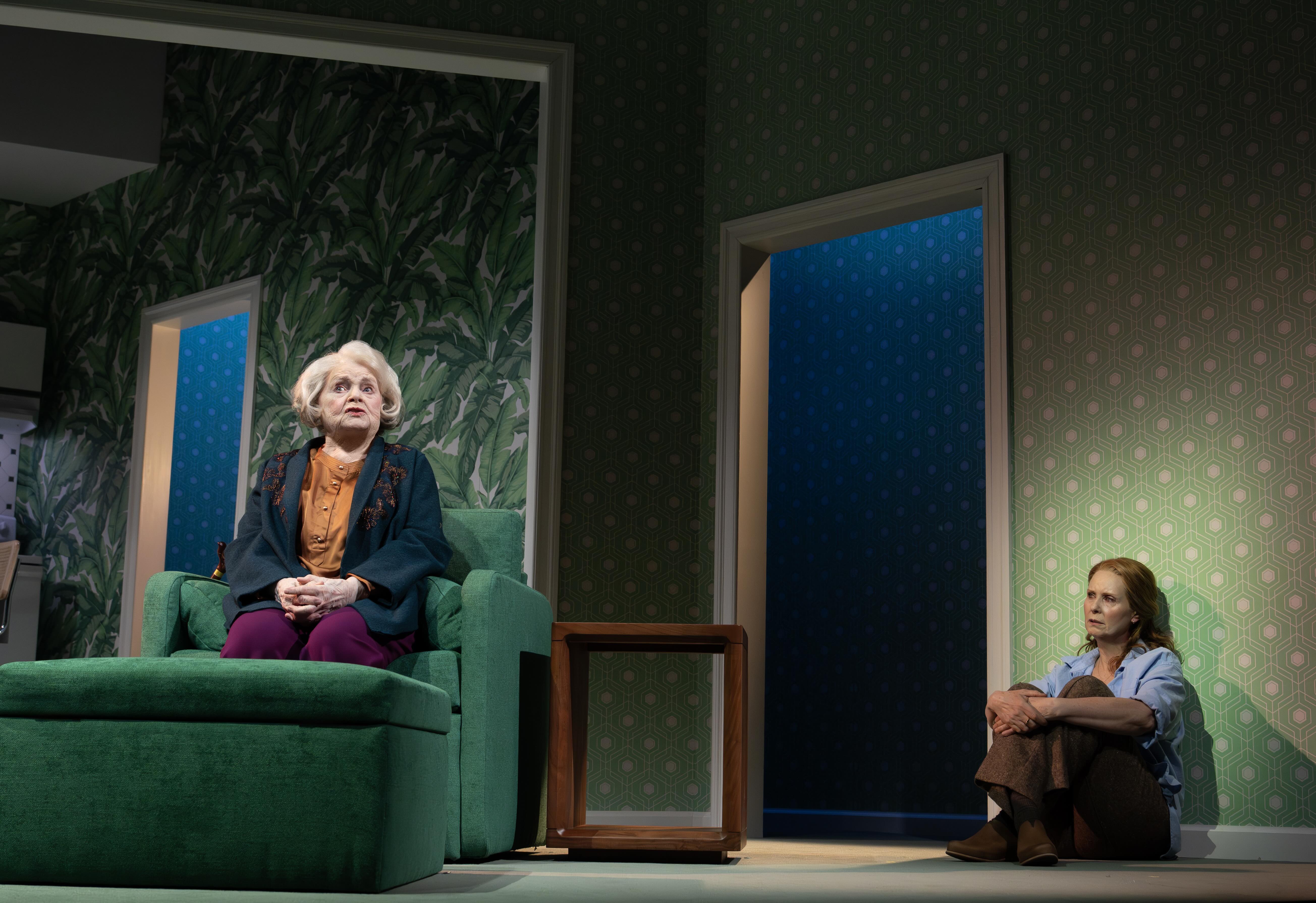
Since the play's premise hinges on advanced artificial intelligence, which is currently reshaping our reality, it feels more eerily relevant. But as Harrison noted when I interviewed him 10 years ago, Marjorie Prime was not meant as predictive science fiction. Even though it takes place in 2062 (just do the math: Marjorie was born in 1977, and her pop-cultural touchstones include the Julia Roberts rom-com My Best Friend's Wedding and Beyoncé's "Single Ladies (Put a Ring on It)"), it's designed to look, sound, and feel like right now. Lee Jellinek’s sterile set, appointed with green furniture and lush foliage wallpaper, resembles the assisted living facility down my block. And Márion Talán de la Rosa’s casual costumes could be purchased off the rack at T.J. Maxx. The play isn’t interested in what will change about our lives in four decades, it’s actually about what won’t change, resulting in a timeless examination of what makes us human.
And yet, the play was prescient. In 2014 when Marjorie Prime made its world premiere at the Mark Taper Forum in Los Angeles, the idea of AI companions seemed incredible, not imminent, like an idea lifted from Philip K. Dick's Do Androids Dream of Electric Sheep? Today, many are turning to AI chatbots for friendship and counseling, sometimes with devastating results. As Tess tells her husband with sad resignation: "Science fiction is here. Every day is science fiction. We buy these things… [and] tell them our deepest secrets, even though we have no earthly idea how they work. We treat them like our loved ones."
How technology, particularly AI, continues to impact the human condition is certainly considered in the play. Tess envying Walter Prime's relationship with her mother reminded me of a moment in another dramatic work interrogating human-machine connections, Maybe Happy Ending, when a melancholy man admits to being jealous of his late father's surrogate robot son.
However, unlike that musical, the person's the thing in Marjorie Prime. And not just the people onstage, the ones in the audience, too. Dare I admit how much of myself I saw in Tess? Her worry, her tension, her disappointment, her simmering rage at her family but, ultimately, herself. I left Marjorie Prime vowing to be calmer and kinder (we'll see how long that lasts), and with the hope that the next time I encounter this exquisite play, my memories, which make me me, are still at least somewhat intact.
Marjorie Prime is playing now on Broadway at the Hayes Theater.